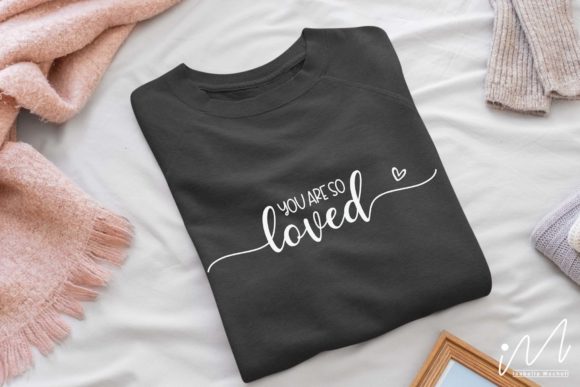
You Are so Loved Valentine
As a designer who’s stitched thousands of phrases onto baby onesies, boutique totes, and personalized sweatshirts, I opened You Are so Loved Valentine expecting warmth—and got it instantly. But warmth alone doesn’t stitch well. So I tested it—not as a file preview, but as a real embroidery project: a soft, heather-gray organic cotton tote for a local gift shop’s Valentine’s Day launch. Here’s what held up, what needed adjustment, and where this design truly shines.
A First Impression That Feels Like a Hug
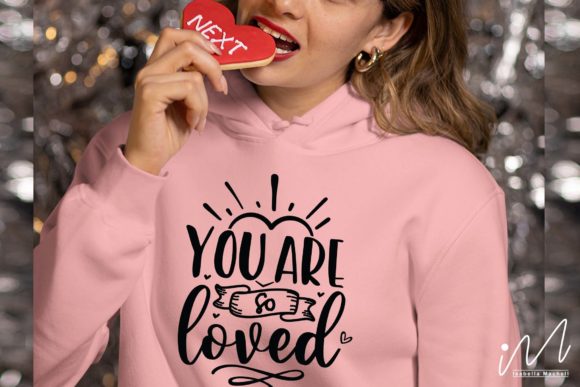
The layout is gentle but intentional—curved baseline, slightly rounded letterforms, no sharp angles or aggressive serifs. It’s not cutesy, not overly scripty, and avoids the brittle elegance that frays under dense stitching. The phrase “You are so loved” breathes with quiet confidence. For embroidery, that matters more than you’d think: letters with open counters (like the ‘e’ and ‘o’) stay legible at 3.5" wide; spacing between words allows fill stitches to settle without crowding. It’s a machine embroidery design that assumes kindness—not just in message, but in construction.
Where It Stitches Best (and Why)
I ran You Are so Loved Valentine on four substrates: midweight cotton twill (for patches), French terry (sweatshirt), linen-cotton blend (tea towel), and interlock knit (baby onesie). On the tote bag? Perfect. The moderate stitch density gave clean satin-stitched edges without pucker, and the height-to-width ratio kept it centered and balanced—even when hooped off-center for a side-panel placement.
- Embroidered patch: Crisp, stable, and rich in texture—ideal for iron-on backing or sewn-on nursery decor.
- Sweatshirt embroidery: Holds shape beautifully on ribbed cuffs and relaxed crewnecks—no distortion on curved seams.
- Baby embroidery: Soft enough for onesies and burp cloths; the lowercase ‘a’ and ‘e’ avoid tiny interior fills that snag delicate skin.
- Holiday embroidery: Works year-round, but especially resonant for Valentine’s, Mother’s Day, or hospital welcome bundles—its tone feels inclusive, not seasonal.
Where to Pause—and Plan Ahead
This isn’t a one-size-fits-all digital embroidery file. Its grace depends on context:
- Small hoop sizes (under 4"): Scale down only to ~3". Below that, the subtle curves in “loved” compress and lose definition. Test first on scrap—especially if planning caps or cuff embroidery.
- Textured or stretchy fabric: French terry and jersey need medium-cutaway stabilizer. Without it, the lower curve of “loved” can ripple. Don’t skip the stabilizer—it’s part of the design’s integrity.
- Dark fabric: The design’s natural rhythm works best with high-contrast thread (ivory on charcoal, blush on navy). Avoid matching thread—it disappears into shadowed curves.
- Tiny lettering or layered garments: Not suited for inner hem tags or multi-layered hoodies unless resized and re-digitized. This is a front-and-center handmade product, not a discreet accent.
What It Does for Your Craft Business
For Etsy sellers and small shop owners, You Are so Loved Valentine is quietly strategic. It reads clearly in mockups—no squinting, no “what does that say?” confusion. That builds trust before the buyer even clicks “add to cart.” In my shop, phrases like this consistently convert higher on personalized gifts because they feel *meant*, not mass-produced.
It also supports brand consistency. Whether you’re embroidering tea towels for a kitchen boutique or baby blankets for a maternity concierge service, the design carries warmth without leaning into cliché. That’s rare in Graphics meant for Crafts—it avoids glitter hearts or cartoon Cupids, letting the words carry weight.
And yes—it scales cleanly for printable mockups. I dropped the PNG into a flat-lay of a folded linen pillow cover, adjusted brightness to match real thread sheen, and shared it with a client. She approved instantly. No revisions. That’s time saved, and perceived professionalism earned.
Designer Notes You’ll Actually Use
Before stitching your first finished product:
- Test on scrap fabric *with your exact stabilizer and thread*. A PNG looks smooth; real thread has body.
- Check stitch density in the lowercase ‘a’ and ‘e’. If your machine hesitates or stitches double, reduce density slightly—don’t force it.
- Review the design in black-and-white mockups. Does it hold contrast on light *and* dark backgrounds? (It does—but verify with your brand palette.)
- Confirm licensing. Since this includes SVG, DXF, EPS, and PNG, it’s likely for both personal and commercial use—but always check the seller’s terms before listing embroidered goods on Etsy or wholesale platforms.
- Use proper hooping tension. This design’s gentle curves show every wobble—if the fabric shifts, the baseline tilts. A steady hoop = steady love.
Final Thought: It’s Not Just a Phrase—It’s a Vibe You Can Stitch
You Are so Loved Valentine doesn’t shout. It settles in. That makes it ideal for products people keep close: baby blankets they fold beside cribs, aprons worn while baking birthday cakes, tote bags carried to therapy appointments or coffee dates. It’s the kind of embroidery project that earns a second glance—not because it’s flashy, but because it feels true.
If you sell personalized gifts, run a craft business rooted in care, or simply refuse to embroider anything that doesn’t pass the “would I give this to someone I love?” test—you’ll find You Are so Loved Valentine earns its place in your design assets. Not as filler. Not as trend-chasing. But as quiet, confident, stitchable sincerity.